
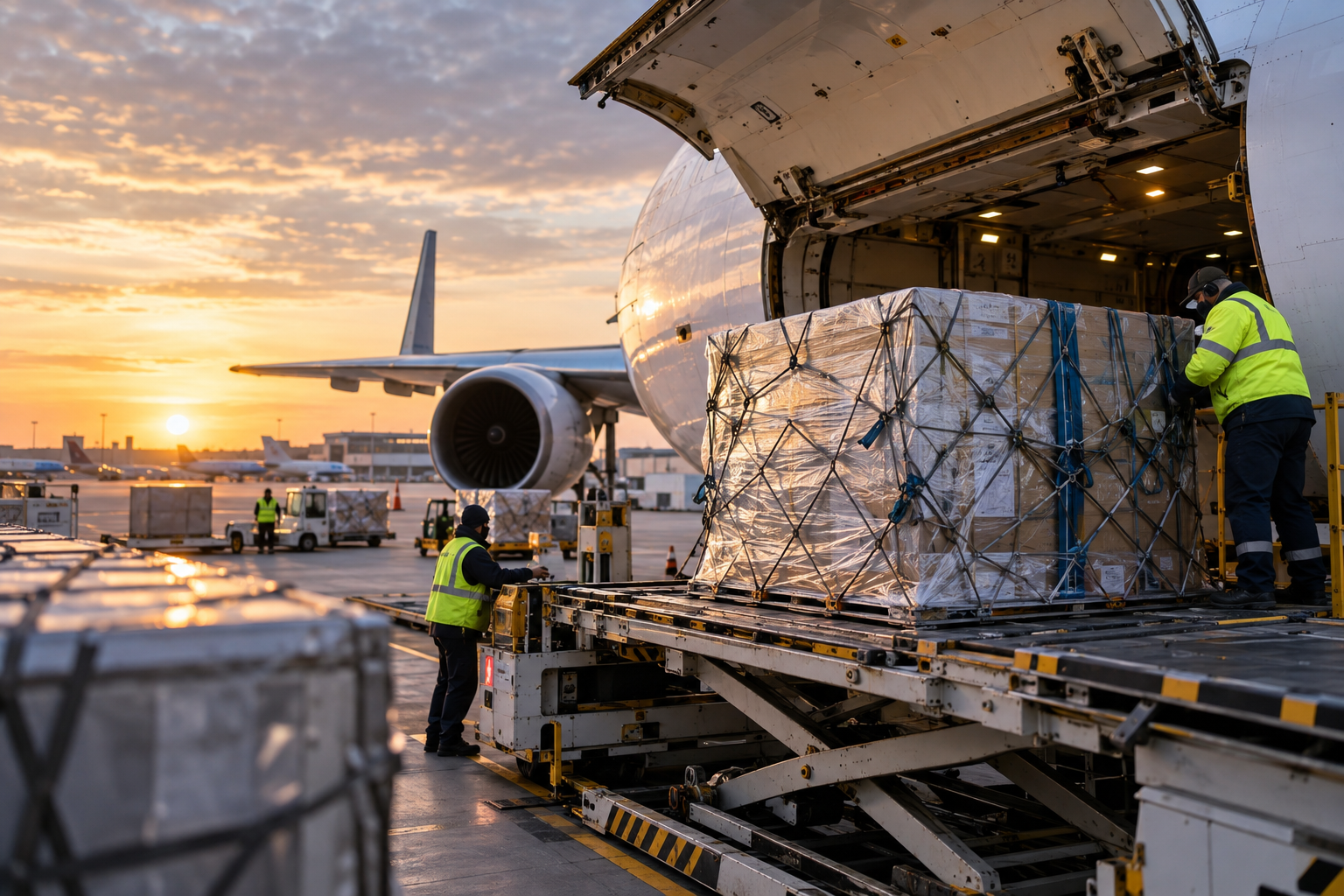
Passenger flight cuts, smaller planes, and full cabins shrink air cargo capacity in the hold first. A forwarder who only books space will watch your freight roll. A forwarder you can hold accountable for lift, recovery, and routing will not.
About 40% of global air cargo still travels where passengers do not sit, in the lower hold of a passenger aircraft. Space in the "belly" of the plane is left over after checked baggage, mail, and the aircraft’s weight and balance limits. Capacity is more readily available on widebody passenger aircraft types. A 777-300ER or A350 on a long-haul sector can lift around 20 tons of freight, while an A321neo on the same city pair may lift a couple of tons, or none once bags are loaded.
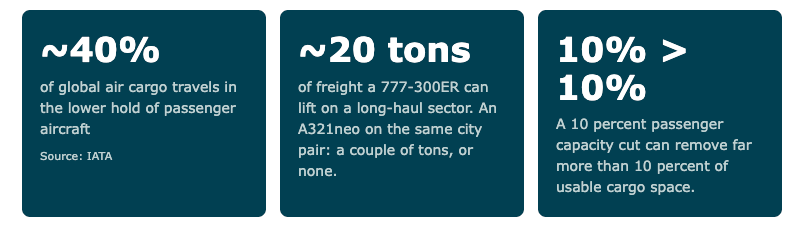
When an airline reduces passenger capacity, cargo does not shrink in a straight line with seats. It shrinks faster. Flight schedule cuts remove the extra departures that used to be the recovery flight. Swapping a widebody for a narrowbody can erase most of the freight hold while passenger counts look only modestly lower. High load factors and heavy bags, especially around holidays, push cargo off first. Longer routings around closed airspace reduce available payload. Even an “unchanged” flight carries less freight.
That mechanism matters this fall. American, United, and Southwest have warned they will trim Q4 schedules if jet fuel stays expensive, and American expects the latest price jump alone to add about $1 billion to its fourth-quarter fuel bill. Their announcements do not mention cargo, but schedule cuts are exactly how belly space disappears.
The delay in getting product out of distribution centers is often not a warehouse problem. It is a space problem that a forwarder either predicted or unfortunately discovered when your air waybill was rolled.
Dedicated freighters cannot instantly absorb the tonnage that a passenger airline bumps. They fly from different airports on different days. The available space was already sold to customers with block space agreements. The overflow shows up as waitlisted bookings, missed hub connections, and space available next week.
How passenger flight cuts reach your dock
You rarely see the airline’s schedule change. Instead, you see the symptoms. A confirmed booking gets waitlisted the day before departure. Freight flies the first segment then sits because the next onward flight’s belly space is gone. A lane that used to be overnight becomes a three day recovery. Rates increase because the remaining kilos are sold at a premium.
Those symptoms cluster on lanes that depend on passenger widebodies: transatlantic general cargo and any routing that assumed a nightly hub connection. Freighter-heavy lanes like transpacific are impacted less until everyone else tries to buy the same 777F.
Why belly cargo capacity and seats do not follow the same curve
Belly cargo is a byproduct of the passenger network. Airlines design schedules for people, not cargo space. When they reduce frequencies, downsize aircraft, or fill cabins, freight is the first payload they can leave behind. A 10 percent passenger capacity cut on a widebody lane can remove far more than 10 percent of usable cargo space especially if the remaining flights are narrowbodies or baggage heavy.
What shippers should evaluate in a freight forwarder
A forwarder cannot manufacture widebody belly space on passenger airlines. They can choose whose space they buy, how they recover when a passenger flight is canceled, or cargo is offloaded. The key is whether they tell you before or after the freight sits. The evaluation below is not a beauty contest of branch offices; it is a space and recovery review. If a provider cannot answer these questions on your top lanes, the delay is already designed in their operation.
1. Mix of passenger belly cargo and dedicated freighters
Ask what share of your lanes move on passenger aircraft versus freighters. A forwarder that depends on passenger allotments is exposed to every winter schedule cut and every last minute aircraft swap. A forwarder with freighter lift, even as backup, has a second market when belly space vanishes.
Ask this: For each of our top lanes, what share moved on passenger airline belly space versus freighter in the last 90 days and on which operating carriers and aircraft types?
What good looks like: Named carriers and a stated mix by lane. For example, PVG–ORD 60% 777F, 40% passenger belly via SFO.
“We use all the majors” is not an answer.
2. Guaranteed space, not hopeful space
Allotments and dedicated space agreements are the means forwarders use to lock kilos before the passenger department fills the cabin. Ad hoc space available is the first to disappear when an airline reduces frequencies. In a tight market “confirmed” on a system screen is not the same as contracted lift.
Ask this: Which of our lanes have contracted allotments or block space? What happens if we exceed them? How much of last quarter’s freight moved on allotment versus space available?
What good looks like: Lane level allotments, a process for overage, and evidence that this space was used.
Not a global claim that “we have allocations with everyone.”
3. Carrier concentration risk
If most of your air freight is tendered to one passenger airline, a single route cut is a network event for you. Evaluate how many operating carriers the forwarder can tender to on each trade lane, including cargo only operators and carriers that serve a nearby gateway. Diversity on a slide deck is not diversity on the air waybill.
Ask this: What share of our air freight moved on the top carrier last quarter? What is the backup operating carrier on each of our five largest lanes?
What good looks like: A concentration number you can check against your own AWBs, plus a named backup that has moved your freight.
Not a carrier they “could” use.
4. Gateway and routing flexibility
Passenger airline networks use a hub and spoke model. When a passenger bank (a window of connecting flights) is reduced at FRA, DOH, ICN, or ORD, the recovery is often a truck to another airport, a refile over a different hub, or a transshipment that adds a day in exchange for space on a freighter. Forwarders who only use the obvious gateway will wait with everyone else.
Ask this: Show us the alternate gateway map for our top lanes. If tonight’s passenger flight is canceled, what is the next physical path including truck legs and how many hours does it add?
What good looks like: A written playbook with airports, truck times, and cut-offs.
A verbal “we’ll figure it out” means you will learn the routing after the delay has occurred.
5. Offload recovery in the first four hours
Cargo is routinely offloaded for weight, bags, or a last minute passenger aircraft swap. The delay is determined by what happens next. Does the forwarder rebook the next freighter, truck to another airport, split the shipment so critical pieces move or wait for the same flight tomorrow which may also be full?
Ask this: When our freight is bumped, who is notified, what time, and what is the SLA for a new booking? Can you split pieces to protect a production line or critical product launch?
What good looks like: A named operations owner, a time stamped alert to you, and the authority to split or refile without waiting for the next business day.
6. Capacity intelligence before the booking
Passenger schedule changes are published weeks ahead. Cargo sales teams see load factors and allotment returns. A forwarder who only reacts after your AWB is rolled is a messenger. A forwarder who flags that a Saturday bank is shortening in the winter schedule then moves you to a Tuesday cargo flight is doing the job.
Ask this: How do you watch passenger capacity on our lanes? Who gets the alert and how far ahead of a schedule change or known peak?
What good looks like: A cadence (weekly lane review, pre peak briefing) and examples of advice they gave before freight sat.
After the fact status emails do not count.
7. Charter and part charter as an escalation, not a brochure
When commercial belly and freighter space is gone, the remaining options are full charters, shared charters and on board couriers for the critical pieces. You do not need a 747F every week. You need a forwarder who has executed one, knows the lead time and airport constraints, and can price a shared charter against the cost of a line down or missed runway event.
Ask this: When did you last arrange a charter or shared charter on a lane like ours? What is the realistic lead time and how would you isolate the pieces that urgently need to fly?
What good looks like: A recent example with aircraft type and cost band, plus a method for shipping only the bottleneck SKUs rather than the whole consignment at charter rates.
8. Cut off and document discipline
In a tight belly market, late documents lose the space. Missing dangerous goods paperwork, wrong dimensions, an open customs filing, or “the commercial invoice is coming” are how freight misses a flight that will not have room tomorrow. The forwarder who does not enforce hard cut offs is not being flexible. They are spending your allotment on hope.
Ask this: What are the hard document and physical cut offs on our lanes and what share of our shipments missed uplift last quarter because of late or incomplete data?
What good looks like: Published cut offs by gateway, a missed reason code you can see, and staffing that can file export and DG paperwork the same day not via a next morning queue.
9. Delay metrics you can verify
On-time percentages hide offloads. “Delivered as promised” can mean the promise was quietly rewritten after the passenger flight disappeared. You want operational numbers by lane not a global score.
- Offload / roll rate: share of shipments that did not move on the originally booked flight
- Booking to uplift time: hours from ready freight to actual departure
- Recovery time after a miss: hours until the next uplift
- Flown as booked rate: share that kept the original routing and flight
Ask this: Provide these four metrics for our top lanes over the last two quarters. If a passenger airline schedule changes, show the before and after.
What good looks like: Lane level tables from their system, reconcilable to your AWBs.
If they cannot produce the numbers, they cannot manage the delay.
10. Mode shift without starting from zero
Not every kilo should fly on the last remaining premium belly. A mature forwarder can split a consignment: critical pieces on the next freighter, the balance deferred or ocean-air, or a truck to a less constrained gateway. That requires SKU-level instructions from you, and a forwarder willing to operate that way instead of one air waybill, one flight, hope.
Ask this: If this lane loses half its belly space next month, how would you split our freight by urgency, and what are the transit and cost bands for the non-premium remainder?
What good looks like: A previously agreed triage: which SKUs must fly, which can wait 48 hours, which can take ocean-air option, and who has authority to split without a committee.
11. Destination control, not just origin booking
Origin space is only half of the story. The other half is a destination agent who cannot clear, a missed trucker, or a broker who works banker's hours while the freighter arrives at 04:00. Passenger to freighter shifts often change the arrival airport and time. If the destination side is an anonymous agent, recovery dies on the tarmac.
Ask this: Who is the destination handler on each of our lanes, an owned station or agent? What is the after hours clearance and trucking path when a flight arrives overnight?
What good looks like: Named handler, hours of operation, and a backup broker.
“Our partner network” is not controlled.
12. Named people when the passenger flight is canceled or lacks capacity at 21:00
When a passenger aircraft is canceled or cargo is offloaded after dinner, a shared operations inbox will not save a Monday production start. You want a named after hours contact in the origin time zone with a path for an escalation into the airline cargo desk, and coverage that does not wait for 08:00.
Ask this: Who do we call after hours on our origin gateways, and what authority do they have to rebook, split, or truck without waiting for morning?
What good looks like: A person with a phone, a backup, and evidence they have used airline cargo desk relationships at night, not a monitored mailbox.
A practical review this month
Do not wait for the next peak. Pull the last 90 days of air shipments and sit with the forwarder against this list. For each top lane, write down five lines:
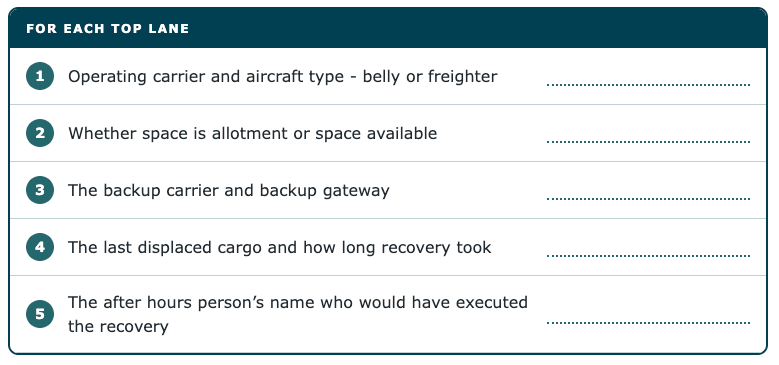
If those five lines are blank, you do not have a delay prevention program. You have a booking desk attached to a passenger network you do not control.
.png?width=775&height=339&name=Preview-Air-Cargo-Capacity-blog-09-25-2026_08_54_AM%20(1).png)